Necessary Packing List
We want your Khopra Danda Trek to be as comfortable and enjoyable as possible. That’s why we’ve created a helpful list of essential things to pack. Just keep in mind that your exact gear will depend on the time of year you are trekking.
Clothing
Base Layers
Trekking Layers
- 2–3 moisture-wicking shirts
- 1–2 long-sleeve trekking shirts
- (Optional) 1 short-sleeve
- 1 fleece layer
- 1 waterproof jacket
- 1 warm down jacket
- (Optional) windbreaker
Pants
- 1 trekking pants
- 1 waterproof pair of pants
- (Optional) 1 convertible pant
- 1 fleece pant for lodge evenings
Accessories
- Warm hat, sun hat
- Neck gaiter/scarf
- Balaclava (cold seasons)
- Gloves: thin liners + insulated pair
- Gaiters (snow/mud)
- (Optional) rain poncho
Undergarments
- 4–6 quick-dry underwear
- Women: 2–3 sports bras
Footwear
- Waterproof trekking boots
- 3–5 wool trekking socks
- 1–2 sock liners
- (Optional) compression socks
- Camp shoes for lodges
- Microspikes (winter or icy conditions)
Eyewear
- Sunglasses (UV)
- Glacier glasses (snow glare)
- Prescription glasses + spare (optional)
Backpacks / Storage
- 60–80L duffel (carried by porter)
- 25–35L daypack
- Dry bags/pack liner
- Small lock
Sleeping Gear
- Sleeping bag rated to –10°C to –15°C
- Sleeping bag liner
- (Optional) travel pillow
- Stuff sack
Hydration & Snacks
- 2 water bottles or 1.5–2L bladder
- Water purification (tabs/filter/UV)
- Trail snacks (bars, nuts, dried fruit)
- Electrolyte tabs
- Instant coffee/tea (optional)
Hygiene
- Biodegradable soap
- Toothbrush & small toothpaste
- Wet wipes, tissues
- Fast-dry towel
- Hand sanitizer
- Sunscreen SPF 50+, SPF lip balm
- Bug repellent (lower altitudes)
- Women: sanitary products
First Aid & Emergency
- Painkillers, blister plasters
- Antiseptic cream
- Rehydration salts
- Personal medications
- Diamox (only with doctor approval)
- Small scissors/tweezers
Electronics
- Headlamp + extra batteries
- Power bank
- Phone + charger
- Camera (optional)
- Universal adapter
- (Optional): solar charger, GPS, walkie-talkie, mini speaker
Documents & Money
- Passport
- Nepal visa
- ACAP permit
- TIMS card
- Travel insurance (must include high-altitude)
- Passport photos
- Cash (NPR + small USD; ~$20/day personal expenses)
Miscellaneous
- Ziploc bags
- Trash bag
- Notebook + pen
- Cards/book
- Whistle
- Small sewing kit
- Compression sacks
- Duct tape (mini roll)
- Emergency contact list
Best time and Weather information
The Khopra Danda Trek is doable year-round, but each month offers its own speciality. Below is a clear breakdown of temperatures and what makes each month unique, so you can choose the season that suits your style.
I. Spring Season: A colourful, refreshing time when forest trails come alive, temperatures turn mild, and rhododendrons bloom. Ideal for travellers who love flowers, nature, and stable trekking conditions.
March
Temperature: 4°C to 12°C (day) / –4°C to 0°C (night)
Speciality: As winter has just ended, March marks the beginning of a fresh new season. Early rhododendrons start to bloom, adding gentle colours to the trail. This is the perfect season if you enjoy soft spring light and calm mountain scenery.
April
- Temperature: 8°C to 16°C (day) / 0°C to 4°C (night)
- Speciality: Peak rhododendron season. Entire hillsides burst into red, pink, and white, making April one of the most visually spectacular months in the Annapurna region.
May
Temperature: 12°C to 20°C (day) / 4°C to 8°C (night)
Speciality: Warm, comfortable walking conditions and long daylight hours make May ideal for relaxed pacing, photography, and fully appreciating the greenery.
II. Monsoon Season: Warm, humid, and rainy—perfect for lush landscapes, solitude, and dramatic nature scenes. Trails can be wet and unpredictable.
June
Temperature: 14°C to 22°C (day) / 6°C to 10°C (night)
Speciality: Wildflowers flourish just as the monsoon settles in, adding vibrant colours to misty mountain ridges.
July
Temperature: 14°C to 22°C (day) / 6°C to 10°C (night)
Speciality: Forests reach peak greenery, and waterfalls become powerful and dramatic—rewarding for trekkers comfortable with wet and muddy trails.
August
Temperature: 14°C to 22°C (day) / 6°C to 10°C (night)
Speciality: Clouds swirl below the ridges, creating rare “above the clouds” moments that photographers love.
III. Autumn Season: This is the classic trekking window for Khopra Danda. Clear skies, crisp air, and the most reliable mountain views of the year. The classic and most popular trekking season.
September
October
Temperature: 8°C to 16°C (day) / 0°C to 4°C (night)
Speciality: This is the month for iconic, postcard-perfect Himalayan views—crystal clear mornings and high visibility almost every day.
November
Temperature: 2°C to 10°C (day) / –4°C to 0°C (night)
Speciality: Cooler, dry air brings razor-sharp mountain clarity with fewer crowds—ideal for trekkers seeking peace without extreme winter cold.
IV. Winter Season: Cold, quiet, and beautifully clear. Perfect for experienced trekkers who enjoy snow-dusted trails and peaceful lodges.
December
Temperature: –1°C to 6°C (day) / –8°C to –4°C (night)
Speciality: Early winter brings crisp, stable days and light snow on higher sections—beautiful yet still manageable for well-prepared trekkers.
January
Temperature: –2°C to 6°C (day) / –10°C to –6°C (night)
Speciality: The most peaceful month of the year; sunrises are exceptionally vivid because of the cold, dry atmosphere.
February
Temperature: 0°C to 8°C (day) / –8°C to –4°C (night)
Speciality: Late winter hints of warmth begin to return, and wildlife activity slowly increases as animals emerge from deeper forests.
Altitude Sickness and Prevention
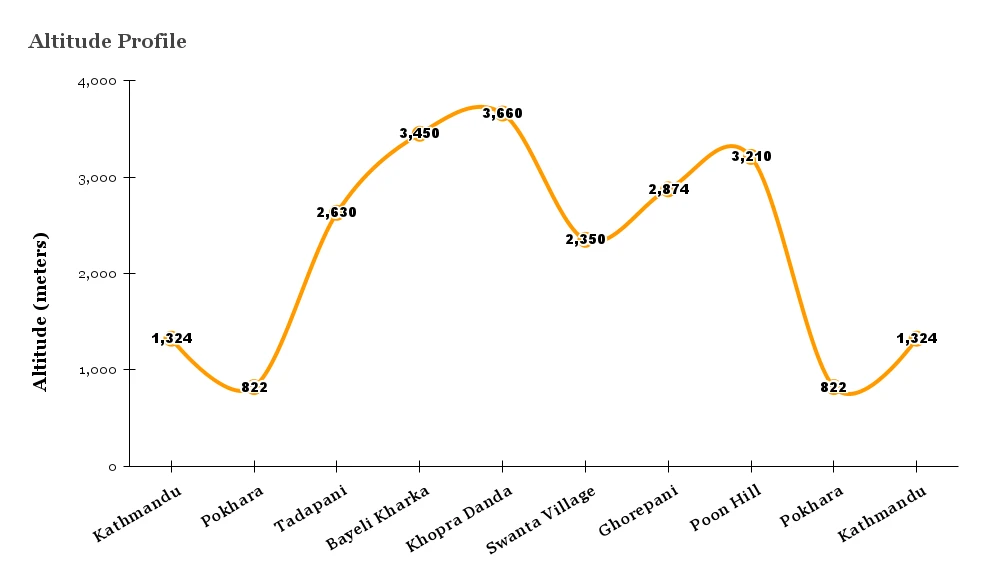
While Khopra Danda doesn’t reach the extreme altitudes of Everest Base Camp, it’s important to be aware that altitude sickness can still occur. The trek gradually ascends from Ghandruk (1,940 m) to Khopra Danda at 3,660 m, with an optional side trip to Khayer Lake at 4,660 m. Daily altitude gains are generally moderate—around 300–600 m—but careful acclimatization is still essential.
As you climb above 3,000 m, some trekkers may experience mild symptoms such as headaches, nausea, or shortness of breath. To minimize the risk, it’s important to walk at a steady pace, drink plenty of water, avoid alcohol, and pay close attention to how your body feels. If necessary, medications like acetazolamide (Diamox) can be taken under a doctor’s guidance.
Another key factor in staying safe is trekking with experienced local guides. Our guides are trained to spot early signs of altitude sickness, adjust the group’s pace, and advise when rest or descent is required. They also carry oxygen and essential safety gear, ensuring you are supported throughout the journey.
To further ensure your safety, make sure your travel insurance covers high-altitude trekking and helicopter evacuation in case of emergencies. With proper acclimatization, a steady pace, and guidance from our skilled team, most trekkers complete the Khopra Danda Trek safely and enjoyably.
Khopra Danda Trek Difficulty
The Khopra Danda Trek is a moderate-level adventure suitable for anyone with a reasonable level of fitness. The trails are generally well-maintained and offer a mix of gradual ascents, forest paths, stone steps, and terraced farmland. This variety keeps each day interesting and engaging without being overly strenuous.
For most trekkers, you’ll walk 4–6 hours per day, making the trek manageable for beginners, first-time trekkers, and families with children over seven. One optional side hike to Khayer Lake reaches 4,660 m, which adds a slightly more challenging day. By then, your body will already be well-acclimatised from previous days at Khopra Danda (3,660 m).
At the same time, it’s important to listen to your body and pace yourself, particularly if you have any heart, lung, or respiratory concerns, and to follow your doctor’s advice before attempting the trek. There’s no need to worry—our experienced guides are there to support you throughout. They carefully monitor acclimatization, suggest rest when needed, and ensure the trek remains safe and enjoyable.
Overall, the Khopra Danda Trek strikes a perfect balance between rewarding scenery and a comfortable pace. The trails allow most people, whether first-time trekkers or experienced adventurers, to enjoy the Himalayan landscapes with confidence and ease. By the end of the journey, you’ll feel a genuine sense of accomplishment and be inspired by the serenity and beauty that surround you at every step.
Accommodation
You’ll stay in traditional teahouses throughout the Khopra Danda Trek. These are simple, comfortable mountain lodges run by local families. Rooms usually have twin beds, warm blankets, and basic furnishings. Heating is available in the dining hall, where trekkers gather to enjoy meals and unwind after a long day.
At higher points like Khopra Ridge and Bayeli, the teahouses are more basic, but the hospitality is warm and the views are unforgettable. Most teahouses provide shared bathrooms, and hot showers are available at an extra cost in many places. Staying in these community-run lodges also ensures that your journey directly supports the local economy.
Meals on the Khopra Danda Trek
Meals on the Khopra Danda Trek are fresh, simple, and filling, designed to keep you energized for each day of trekking. While menus vary slightly depending on altitude and availability, teahouses provide a variety of nutritious and hearty options throughout the journey.
Breakfast: Porridge, omelets, toast, pancakes, eggs, tea, coffee, milk.
Lunch: Dal bhat (rice, lentil soup, vegetables, pickles), fried rice, noodles, pasta, potatoes, Tibetan bread, momo.
Dinner: Dal bhat, soups, noodles, stir-fried vegetables, potatoes, pasta, seasonal local dishes.
Hot Drinks and Soups: Tea, coffee, ginger-lemon-honey tea, hot chocolate, clear soups
Please keep in mind that at higher altitudes, menus are simpler due to limited supplies, but meals remain warm, satisfying, and nutritious. Also, boiled water is available at most teahouses for a small fee, helping you stay hydrated on the trail.
Communication Services
Mobile network coverage on the Khopra Danda Trek varies by location. You can expect decent reception in lower villages like Ghandruk and Swanta, with patchier coverage as you climb higher.
Some teahouses offer Wi-Fi, but the connection can be slow or inconsistent, especially in remote sections like Khopra Ridge and Bayeli. Wi-Fi usually comes with a small additional charge.
For better connectivity, many trekkers buy a local SIM card (NTC or Ncell) in Pokhara before starting the trek. These networks work in many areas, but it’s still best to expect a few network-free zones—and enjoy the quiet moments in the mountains.
Nepal Visa
Most visitors can easily get a Visa on Arrival when they enter Nepal. This service is available at Tribhuvan International Airport (TIA) in Kathmandu and at several approved land border points. It is open to travelers from most countries.
Note: Indian citizens do not need a visa to enter Nepal.
What You’ll Need for Your Nepal Visa
To make your arrival smooth, please have the following items ready:
- A valid passport with at least six months of validity
- A filled-out visa application form
- Two passport-size photos
- A printout of your online pre-visa form (if you completed it in advance)
- The visa fee
- Proof of your accommodation, such as a hotel booking or host information
- Your return flight ticket
- Proof that you can support your stay, like recent bank statements
If you are coming to Nepal mainly for the Khopra Danda Trek, a 15-day tourist visa is sufficient. But, if you plan to explore more or stay longer, you can choose a 30-day or 90-day visa instead.
Travel insurance
Trekking in Nepal is a wonderful and unforgettable adventure. However, the mountains can be unpredictable, so it’s important to stay prepared. Because of risks like altitude sickness and sudden weather changes, having proper travel insurance is crucial.
To begin with, your insurance should cover medical emergencies, including treatment for altitude-related problems. It should also include emergency evacuation—especially helicopter rescue—which is often needed in remote areas. In addition, it’s helpful if your policy covers trip cancellations, lost baggage, and unexpected delays. This way, you’re protected even when things don’t go as planned.
Before your trip, make sure your policy clearly states that it covers high-altitude trekking and evacuation up to the highest point you will reach. Lastly, some insurance plans offer 24/7 emergency support, which can be very useful in areas with limited communication.
How to get to Pokhara city from Kathmandu
There are four main ways to travel from Kathmandu to Pokhara: a night bus, a shared tourist bus, a private car, or a domestic flight. You can choose any option that feels most comfortable and convenient for you.
Whether you prefer a scenic road journey or a quick and easy flight with airlines like Yeti Airlines, Buddha Air, or Shree Airlines, there are plenty of choices to suit your travel style.
Stay at Pokhara
Pokhara offers a wide range of accommodations to fit every budget. You can choose from shared dormitories, comfortable mid-range hotels, or luxury stays. Feel free to select the option that best matches your travel budget and preference.
Other Treks in the Annapurna Region
Ghorepani Ghandruk Trek | Annapurna Base Camp Trek | Short ABC Trek - 5 Days | Poon Hill Trek | Tilicho Lake Trek | Annapurna Circuit Trek | Mardi Himal Trek | Nar Phu Valley Trek