Trekking to Everest Base Camp is a personal achievement that stays with you for life. Every step brings you closer to the foot of the world’s highest peak, and standing at Base Camp itself is a moment of pride that few people on earth ever experience.
At Sublime Trails, your safety, comfort, and success are our priorities from the very beginning. Our expertly trained guides — experienced in high-altitude trekking, mountain safety, and local culture — accompany you throughout the route, ensuring you feel supported, well-informed, and confident at every stage of the adventure.
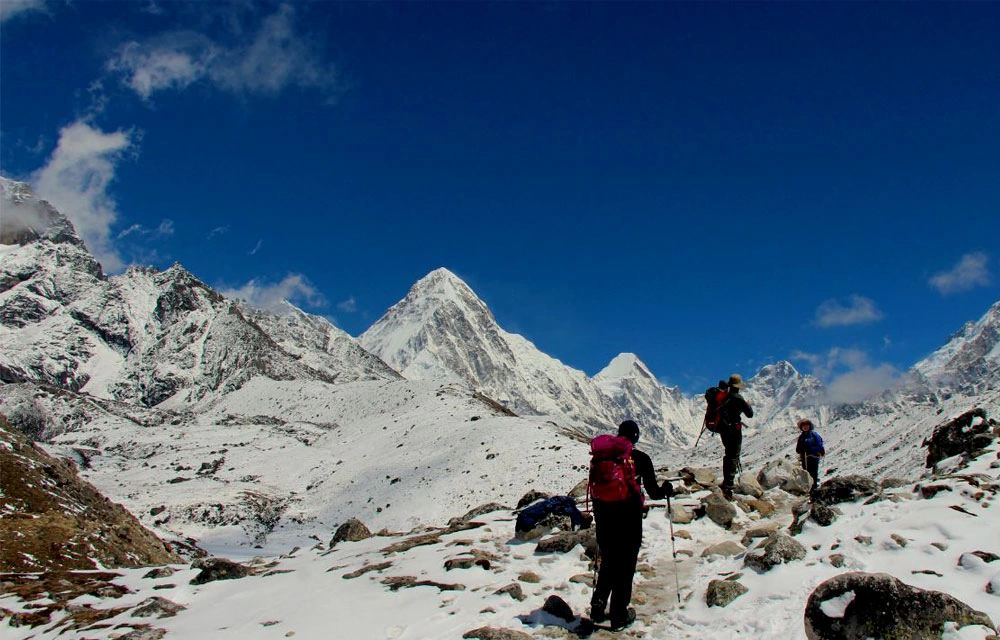
Along the way, you’ll move through some of Nepal’s most breathtaking landscapes: the lush forests of the lower Khumbu, the iconic suspension bridges of the Dudh Koshi Valley, the vast alpine terrain above Namche, and the dramatic glaciers leading to Everest Base Camp. This journey also offers an intimate look into Sherpa culture, ancient monasteries, warm Himalayan hospitality, and villages that have thrived in these mountains for centuries.
This trek is an unforgettable blend of personal accomplishment, expertly guided adventure, and the unmatched scenery and culture of the Everest region — a complete Himalayan experience crafted with care by Sublime Trails.
Highlights
- Trek through epic Everest region landmarks - Hillary Suspension Bridge, Khumbu Glacier, Everest Base Camp, Kala Patthar, and more.
- High altitude trekking and acclimatization experience inside Sagarmatha National Park amidst diverse terrain and geographic topology.
- A journey through the floral diversity of Sagarmatha National Park, with pine and hemlock forests at lower altitudes, transitioning to fir, juniper, birch, rhododendron, scrub, and alpine plant communities at higher elevations.
- Chance to spot rare wildlife such as the red panda, snow leopard, musk deer, Himalayan tahr, marten, Himalayan mouse hare, and over 118 bird species, including the Impeyan pheasant, snow cock, blood pheasant, and red-billed cough.
- Experience Sherpa culture and their way of life in the quaint local villages of Namche Bazaar, Tengboche, and Dingboche.
Day-to-Day Brief Itinerary Description
The classic 14-day Everest Base Camp Trek begins from Kathmandu (or Ramechhap during peak seasons from mid-March to mid-May and mid-September to mid-November). After an early morning scenic flight to Lukla, trekkers pass through picturesque Sherpa villages, cross six suspension bridges between Lukla and Namche, and stay the first night at Phakding before reaching Namche Bazaar.
Namche Bazaar, the largest village in the region, offers modern shopping, cafes, and a taste of local Sherpa culture. This is an important acclimatization stop in our itinerary, which allows you to adjust to a higher altitude before continuing to Tengboche and beyond. The trail then continues to Tengboche, home to the region’s largest monastery, then to Dingboche for a second acclimatization day. From there, trekkers move to Lobuche, followed by Gorakshep and a visit to Everest Base Camp.
The next day, you will tackle Kala Patthar for a sunrise view of Everest and surrounding peaks, then retrace the route back through Pheriche, Namche, and Lukla before flying back to Kathmandu.
This itinerary combines practical pacing, acclimatization, and adventure for a memorable 14-day journey to the heart of the Khumbu region.
Why Book the Everest Base Camp Trek with Sublime Trails
24/7 Support Before, During & After the Trek
From planning to completion, you have continuous support for logistics, gear guidance, and any trek-related needs.
Upgraded Accommodation & Meals
We have upgraded your accommodation from basic teahouses to standard lodges featuring attached bathrooms for six uphill nights—in Phakding, Tengboche, Dingboche, Pheriche, and Namche Bazaar—and two nights on the return in Namche and Lukla. Although Lobuche and Gorak Shep still offer shared bathroom facilities due to high-altitude limitations, you will enjoy clean, hygienic meals and well-managed, comfortable arrangements throughout.
Expert Local Guides
We assign experienced, licensed mountain guides who know the Gokyo region inside out—ensuring safety, cultural insight, and a richer trekking experience.
All-Inclusive, Transparent Pricing
No hidden fees. Permits, logistics, guides, accommodations, and meals are included for a worry-free adventure.
Outstanding Reviews & Reputation
Hundreds of trekkers trust us with consistently excellent feedback for service quality and professionalism.
Sherpa Cultural Experience
Trekking to EBC with Sublime Trails is more than just mountains and the base camp. While staying in traditional Sherpa villages, we will make an effort so you can meet and interact with the Sherpa people and learn about their way of life. Sublime Trails will also arrange visits to local monasteries and other cultural sites.
Who This Trek is Designed For
All you need is a wilful heart and healthy knees - seriously. The Everest Base Camp Trek isn’t reserved for athletes, marathon runners, or hardcore mountaineers. It’s designed for everyday people who want to experience something extraordinary, as long as they’re ready to walk steadily, stay patient with the altitude, and embrace the slow, rewarding pace of Himalayan travel.
This trek is perfect for anyone who dreams of standing at the base of the world’s highest peak, enjoys being outdoors, and doesn’t mind trading a bit of comfort for unforgettable views. If you can comfortably hike for several hours a day and stay positive when the trail gets challenging, you’re exactly the kind of person who thrives on this journey.
The EBC route is ideal for solo travelers, couples, families with grown kids, and anyone looking for a mix of achievement, adventure, culture, and scenic beauty. Whether you’re in your 20s or your 60s, if you’re reasonably fit and mentally prepared for long days on your feet, this trek fits you.
If you want a little extra comfort, guidance, or structure along the way, Sublime Trails makes the entire experience smoother — with expert support, safe pacing, upgraded accommodation, and a team that genuinely wants you to succeed.
14-Day Trek to Everest Base Camp at 5,364 m (17,598 ft)
The Everest Base Camp at 5,364 meters is every trekker’s pilgrimage. Standing at the base of the world’s tallest mountain, surrounded by towering ice formations and snow-capped peaks, is an indescribable feeling.
We take scores of trekkers to base camp every season. While each has its unique trekking experience, the feeling when reaching the giant spray-painted rock at base camp is similar - a sense of accomplishment and pride.
Pride in knowing that you spent days eating and sleeping in modest teahouses, put an incredible strain on your body while listening to it, and conquered the destination with incredible mental fortitude that never wore off.
While the trek to Everest Base Camp is demanding and requires physical fitness and mental determination, it is accessible to most people with the right preparation and a positive mindset.
It’s not just ice formations and tented expedition camps at the base camp of the world’s highest peak. In the climbing seasons of spring and fall, you will see the action firsthand at base camp with tents bustling with expedition groups and preparation activities. Their determination and personal stories are inspiring, leading one to be thankful for human fortitude and the ability to explore and conquer.
Panoramic View from Kala Patthar (5,644 m/ 18,519 ft), Everest Region’s Best Viewpoint
Though not a mountain itself, with a prominence of only 10 meters (33 ft), ascending Kala Patthar is a popular activity among trekkers in the Everest region. This is because it offers the most accessible close-up view of Mount Everest.
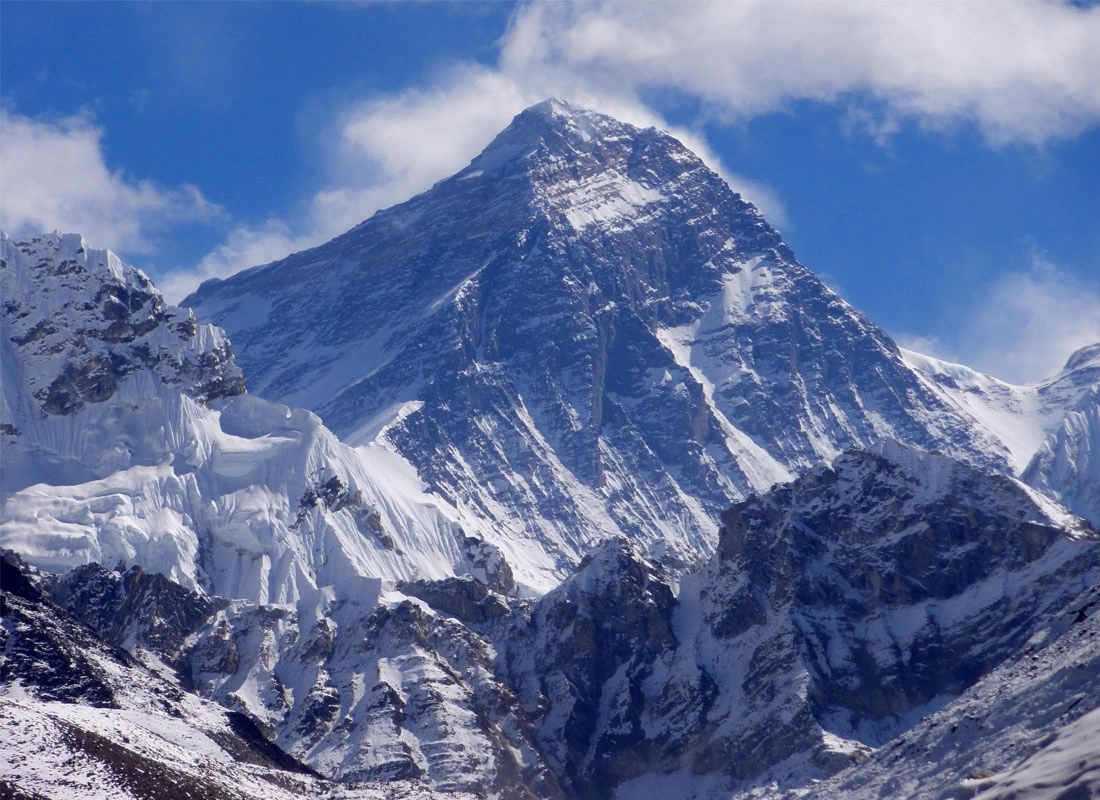
Due to the way the Everest massif is structured, the surrounding areas (including the base camp) have a blocked view of Everest's high summit by Nuptse. This makes Kala Patthar even more special as it offers unobstructed views of Everest.
For this reason, the literal “Black Rock” has arguably become the Everest Region’s preferred vantage point.
The views of Everest, Nuptse, and Ama Dablam are spectacular from Kala Patthar. You can also see the northern flank and summit of Lhotse. Similarly, the panorama comprises Mt. Pumori, Changtse, Thamserku, and Kantega.
There’s another compelling reason to trek to Kala Patthar. The landmark’s peak is the highest point you can go to in the Everest region without a climbing permit. If you include the ascent of Kala Patthar in your Everest trek, it will also be the highest point of your trip. Perhaps for this reason, Kala Patthar is also known for making climbers out of some trekkers - because they find out the best view is from the top.
Discovering Sherpa Traditions, Culture, and Lifestyle While on Your Everest Base Camp Trekking Route
The Sherpa people, renowned for their resilience and mountaineering prowess, inhabit the villages scattered along the trekking route in the Khumbu region of Nepal.
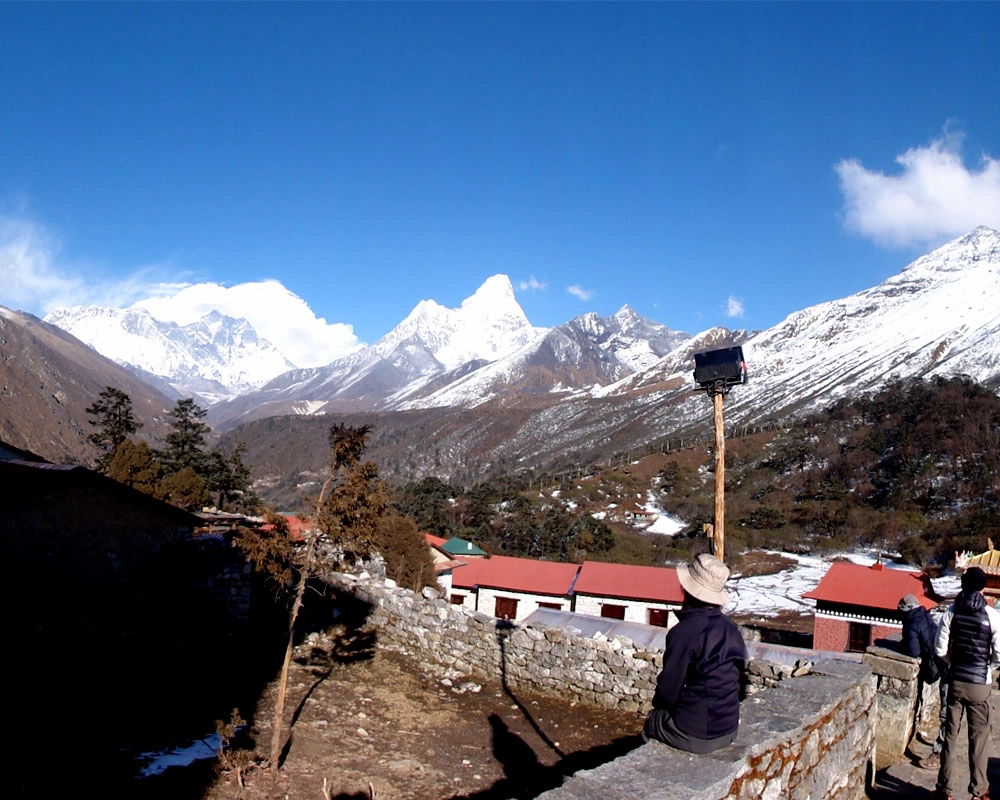
Starting from the vibrant Namche Bazaar, a bustling Sherpa trading hub nestled amidst towering peaks, trekkers can explore local markets bustling with activity and visit ancient monasteries resonating with chants and prayers.
Further along the route, Tengboche Monastery stands as a spiritual beacon, where Sherpa monks engage in religious practices that reflect centuries-old traditions.
Throughout the journey, you will witness Sherpa festivals like Tihar and Mani Rimdu, witnessing colorful rituals, masked dances, and communal feasts that celebrate both the religious and cultural heritage of the Everest region.
Not to forget, dining experiences in Sherpa-run teahouses introduce trekkers to traditional cuisines such as hearty Sherpa stew (thukpa) and sweet Sherpa bread (khapse).
From Khunde, Khumjung, Tengboche, Pangboche, Phortse, Thame, Dingboche, and Lobuche to Gorak Shep, the journey to Mount Everest base camp reveals the heart of Sherpa culture. Along this path, you'll encounter Sherpas carrying loads with seemingly effortless grace, hear stories of their legendary climbs, and witness their deep reverence for the mountains they call home. Each village tells a tale of Sherpas' resilience, spirituality, and the enduring bond between the people and their extraordinary surroundings in Nepal’s Everest region.